
When people hear the words Cerebral Palsy, they often picture limitation. They imagine difficulty walking, difficulty speaking, difficulty moving through the world with ease. What they don’t immediately picture is a comedian delivering a powerful TED Talk. An actor on one of the most acclaimed television dramas of our time. An athlete competing on the Paralympic stage. A model on a global fashion runway.
And yet, those stories exist.
Cerebral Palsy affects muscle tone, coordination, and movement. But, it does not affect ambition. It does not erase intelligence. And it does not determine someone’s worth. The problem is not the diagnosis itself – it’s the narrow assumptions that so often follow.

Take the actor, RJ Mitte for example. Best known for his role as Walter White Jr. on Breaking Bad, has had Cerebral Palsy for almost his entire life. Early in his career, he was often told his disability would limit the kins of roles he could play. Instead, he built a career that challenged industry norms around representation in Hollywood. He has since become a vocal advocate for authentic casting and disability inclusion in media – not as a symbol of inspiration, but as a professional demanding equity.

In a very different arena, comedian and activist Maysoon Zayid has also challenged assumptions – this time through humor. Where some might expect silence or hesitation, she commands the stage with confidence. In her widely viewed TED Talk, she addresses her Cerebral Palsy openly, often disarming audiences with sharp wit before they have a chance to define her by what they see. Her work goes beyond comedy; she is an advocate for disability rights and inclusion, especially for women and people of color with disabilities.
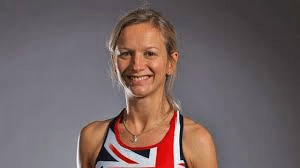
While entertainment offers one form of visibility, athletics offers another. Across the Paralympic Games, athletes with Cerebral Palsy train and compete at elite levels. British sprinter Sophia Warner is one example among many. Her presence on the track is not about inspiration – it is about competition, discipline, and performance. Like any high-level athlete, she trains to win. Cerebral Palsy may influence how she runs, but it does not diminish the seriousness of her pursuit.
Together, these stories span industries, generations, and personalities. They look different from one another – and that’s the point. There is no single “Cerebral Palsy story.” There is no one personality type, no one career path, no one way to live with CP.
And yet, for every well-known name, there are thousands of individuals whose resilience will never make headlines.
There is the child who spends months in physical therapy learning to balance independently, celebrating steps that others take for granted. There is the teenager who uses adaptive technology to participate fully in class discussions, determined not to let slower speech silence fast ideas. There is the adult who advocates for accessibility in the workplace – not because they want special treatment, but because access should never have been optional.
What connects all of these stories, famous or not, is not inspiration. It is humanity.
Too often, people with Cerebral Palsy are framed as either tragic or heroic. But they are neither. They are people navigating a world that is still learning how to include them. They have goals, frustrations, humor, ambition, talent, and ordinary routines. They experience success and failure like anyone else.
Cerebral Palsy may change how someone moves through the world. It may mean walking differently, speaking differently, or using assistive devices. But different is not less.
Different does not mean incapable.
Different does not mean dependent.
Different does not mean limited potential.
When we shift our thinking from assumption to understanding, we begin to see the full picture. We see actors, athletes, comedians, professionals, students, parents – individuals whose lives are shaped by Cerebral Palsy but never reduced to it.
That is what I wish people understood.
Cerebral Palsy represents difference in movement. It does not represent lesser value.
And it never has.
Penned By:
Rtr. Savini Yasanayake
Editorial Committee Member 25.26

 Rotaract Club of SLIIT
Leave a comment