

First let’s start with the basics, what exactly is a report?
A report is a short, sharp and concise document written for a particular purpose and audience in comparison to an essay which mainly articulates among presenting arguments and reasoning.
When you are asked to compile a report you will usually be given a report brief which provides certain instructions and guidelines. The report brief may outline the purpose, audience and problem or issue that your report must address, together with any specific requirements for format or structure. This guide offers a general introduction to report writing; be sure also to take account of specific instructions provided by your lecturer/head.
How can you make your report stand out?
#1 – Determine its purpose. What should it achieve?
First read through all supplementary material and discuss the aim with the individual or group who put you in charge. Don’t proceed unless you fully understand the task and its purpose.
#2 – Identify your audience and write to them
Keep your audience at the top of your mind throughout the process of writing this report; you can’t write to your readers if you are not aware of who they are.
#3 – Advance in an orderly manner. Research – Write – Summarize.
Now that you know why you’re writing the report, and to whom you’re reporting, you can commence your research. Once you’ve gathered all the information you need, you’re ready to start writing. If it helps, draw out a rough structure of your report so that you are aware of the main topics which needs to be researched on.
#4 – Length matters. Cover your topic, then quit.
Be precise and to the point while also communicating your point effectively.
#5 – Flow logically. Lead the reader from start to finish.
Introduction, body and conclusion should be the skeleton of your report writing. It should flow easily from one point to another.
#6 – Appearance matters. Make it visually appealing.
Utilize headers, sub-headers, table of contents and caption the figures/tables or images you would include. Present large amounts of data in a graphical manner and be creative in a way that doesn’t interfere with your key message.
#7 – Review and revise.
Once the report is done, read it thoroughly and identify if you are able to understand the gist of the report. If you would rather listen to your content than read it, try using google translate and copy paste the document and listen to it.
What structure should we follow when compiling our report?
- Title Page
This would include the general header sheet provided by your university or company. A simple example is illustrated below.

2. Executive Summary (Abstract)
- Brief summary of the content; clear overview
- No more than 1/2 page in length
- Best to be written last when you know the key points of your document
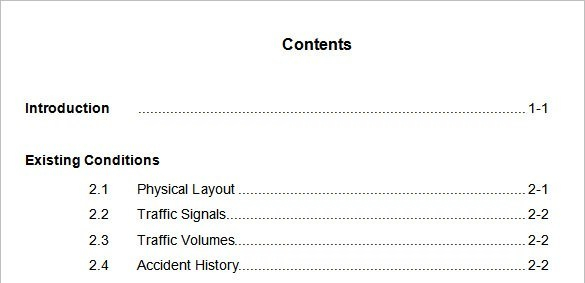
3. Table of contents
- Presented in a manner through which the reader can quickly scan the list of headings and locate a particular section of a report.
- Use clear and consistent numbering system
- It’s best to use the automatic table of contents provided by Word
4. Introduction
What you plan to say and provides a brief summary of the problem under discussion. It should also touch briefly on your conclusions.
5. Report Main Body
- Should be carefully structured in a way that leads the reader through the issue
- You should split it into sections using numbered sub-headings relating to themes or areas for consideration.
- For each theme, you should aim to set out clearly and concisely the main issue under discussion and any areas of difficulty or disagreement.
6. Conclusions and Recommendations
- The conclusion sets out what implications you draw from the information; overall significance of what has been covered.
- Recommendations suggest how you think the situation could be improved, and should be specific, achievable and measurable. If your recommendations have financial implications, you should set these out clearly, with estimated costs if possible.
7. Appendices
- Include supporting material that was not published within the report body; supplementary tables, graphs, questionnaires, transcripts, etc.
- Refer to the appendices in the body of the report.

8. Bibliography
- List, in alphabetical order by author, all published sources referred to in your report.
- Most common reference style is Harvard referencing
Written by-
Rtr. Tharindhie Alles
Co-editor 2018-19

 Rotaract Club of SLIIT
Leave a comment