
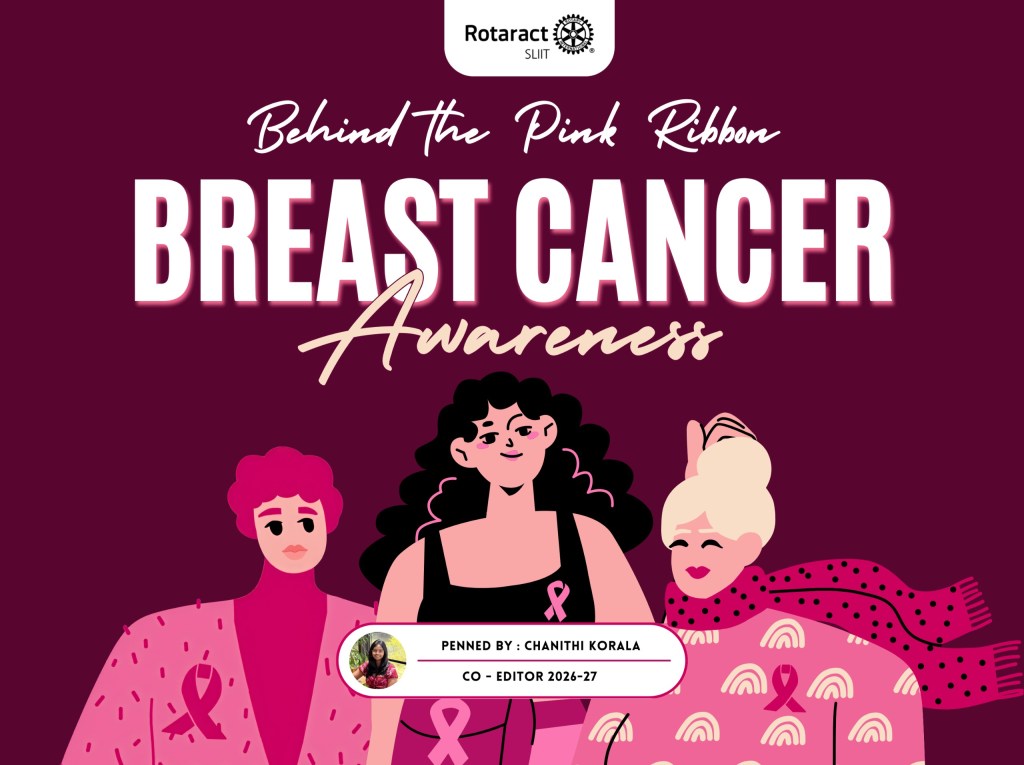
In most families, there is someone who always puts everyone else first.
The mother who remembers everyone’s appointments but keeps postponing her own. The father who worries about the whole family but rarely admits when something is troubling him. The sister who is always there when someone needs help, and the friend who says she
is fine because she does not want to be a burden.
We know these people. Some of us are these people.
And sometimes, looking after everyone else becomes such a habit that we forget to look after ourselves.
A small change in our body becomes something we will check later. An appointment gets postponed because there is work to finish, money to manage, a house to run, or simply too much going on. We tell ourselves it is probably nothing. We are young. We feel fine. Surely, there is no need to worry just yet.
And sometimes, it really is nothing. But sometimes, the uncertainty deserves more attention than we give it.
Breast cancer is not something most of us expect to become part of our own story. We hear about it through awareness campaigns, social media posts, or someone else’s experience. We feel for the person affected, perhaps share a pink ribbon, and carry on with our day.
Until it happens to someone we know.
Suddenly, cancer is no longer just a word in a poster. It is your mother sitting quietly after a doctor’s appointment. It is your sister trying to reassure everyone that she is okay when she is frightened herself. It is your partner asking questions they never thought they would have to ask. It is a family waiting for answers, trying to carry on with ordinary life while privately wondering what comes next.
And it is the person receiving the diagnosis, trying to make sense of how something so life-changing could happen in the middle of an otherwise ordinary life.
Because before someone becomes a patient, they are simply someone living their life. They have bills to pay, messages to answer, people to love, plans they are excited about, and little things they hope to do someday. They never expected that a doctor’s appointment might change the way they look at all of it.
Perhaps that is what makes breast cancer so deeply personal. It does not affect only the body. It reaches into the lives built around that person, too.
There is the mother worrying about how her children will cope. The husband who wants to take away his wife’s fear but does not know how. The daughter who wishes she could do something, anything, to make things easier for her parents. And the person facing the diagnosis who may be trying to stay strong simply because everyone they love is already worried.
Sometimes, everyone is trying to protect everyone else from their fear.
And in the middle of it all, people forget that they are allowed to be scared together.
We often call people facing cancer fighters and warriors. We celebrate their courage, and rightly so. But we should also remember that they are human. They can have difficult days. They can feel exhausted, angry, or uncertain. They can be grateful for the people supporting
them and still struggle with what is happening to their lives.
Not everyone wants to be called inspirational. Sometimes, they just want to be treated normally. To laugh at a silly joke, talk about something other than hospital appointments, or spend time with people who remember who they were before the diagnosis.
And for someone whose body has changed through surgery or treatment, there may be things that are difficult to explain. A scar, hair loss, or changes to their appearance can affect how they see themselves, even when they know their worth has never depended on how they look.
They do not need to be told to stay positive every day. Sometimes, they need someone who will listen without trying to fix everything. Someone who can sit beside them at an appointment, help with something at home, or simply say, “You don’t have to pretend
you’re okay with me.”
We may not always know the right words. But showing up, checking in, and making someone feel less alone can mean more than we realise.
And we need to remember that breast cancer is not exclusively a women’s issue. Although it is much more common in women, men can develop it too. A man should not dismiss an unusual change because he assumes it cannot happen to him. Nor should anyone feel
embarrassed about seeking medical advice for something concerning their body.
A new lump, changes in breast shape or size, skin changes, nipple changes, or unusual discharge should be checked by a healthcare professional. These changes do not automatically mean cancer, but they should not be ignored. Breast cancer can also occur without a noticeable lump.
Knowing your body, being aware of changes, and seeking medical advice when something seems unusual are important. Appropriate screening advice matters, too. You do not have to assume the worst, and you do not have to be certain that something is wrong before
asking for help.
Please do not let embarrassment, fear, or a busy schedule be the reason you keep putting it off.
We spend so much of our lives making sure the people we love are taken care of. We remind our parents to take their medication, encourage our friends to rest, and tell the people closest to us not to neglect their health. Yet when it comes to ourselves, we can be surprisingly willing to wait.
So, this Breast Cancer Awareness Month, let us remember the people behind the pink ribbons. The ones going through treatment, the ones supporting someone they love, and the ones who may have noticed something unusual but have not yet found the courage to
get it checked.
Let us make conversations about breast health less uncomfortable. Let us remind the people we love that their health matters, too. And let us understand that supporting someone with cancer is not only about being there for the big, frightening moments. It is also about showing up on an ordinary Tuesday, when everyone else has gone back to their routines and the person affected is still trying to figure out how to live with everything that has changed.
Because behind every diagnosis is a person with a life that matters far beyond their illness.
A mother is more than the person her family depends on. A father is allowed to be frightened. A daughter deserves to be cared for, too. And anyone facing cancer deserves compassion without having to prove how strong they are.
We cannot promise that life will always unfold the way we hope. But we can make sure that people have the knowledge to recognise when something needs attention, the courage to seek care, and the support of others when the answers are frightening.
This October, wear the pink, share the reminder, and start the conversation. But remember that awareness should last longer than a month.
Check in on the people you love. Encourage them to take their health seriously. And please, give yourself that same care.
Because sometimes, the person who needs reminding the most is the one who has spent their whole life reminding everyone else.
Behind every pink ribbon is a real person, a family that loves them, and a life worth caring for. Let’s not wait for cancer to become our story before we learn to care.
Penned by:
Rtr. Chanithi Korala
Co-editor 26.27


Leave a Reply